Context
Wet floors and decks
The one context where the vocabulary has something behind it, somewhere. A published whole-shoe slip test exists. One listing in this catalog names a standards body and twelve reach for an adjective instead, which makes this the clearest side-by-side comparison the site contains.
What actually decides it
5 things, in order
The floor, its finish and what is on it
A sealed tile with detergent film on it and a bare concrete slab are not the same surface, and neither behaves like the laboratory flooring a bench test is run on. No listing in this catalog names a surface at all.
Whether any test method is named
Exactly one listing here names a standards body for slip resistance. Twelve use non-slip, slip resistant, anti slip or traction and cite nothing. Whether a document exists behind the word is the one thing you can determine from the text.
The tread pattern, and whether it drains
Channels that run out to the edge of the sole can move liquid away from underneath. Channels that stop in the middle cannot. This is visible in a sole photograph and described in none of the sixty-six listings.
How worn the sole already is
Any test result, cited or not, was obtained on a new sample. A tread pattern is a starting condition and it changes. Nothing in any listing addresses the shoe you will actually be wearing in a year.
What is on your feet is only part of it
Load, speed, direction, what you are carrying and what the floor was cleaned with all sit outside the shoe entirely. A grip claim describes one object in a system of several.
Which listing words land here
2 of the 8
- Non-slipPublished method, voluntary
A published test method exists — ASTM F2913, which measures dynamic coefficient of friction on a whole-shoe rig — and nothing obliges any seller to run it. One listing in this catalog names a standards body; twelve use the adjective alone.
13 listings in the catalog use it
- Water resistantPublished method, voluntary
Published test methods for water repellency and penetration exist and are used across the textile trade. No listing in this catalog cites one, states a rating, or explains which of the two words it has chosen.
6 listings in the catalog use it
What this context does not fix (4)
- No sole cancels a wet floor. Nothing on this site says any product prevents a fall, and no listing in this catalog says so either.
- A certification claim is the outcome of a bench test on a laboratory surface, not a promise about the floor you are standing on.
- A water word says nothing about grip. Shedding water and holding the ground are unrelated properties described by unrelated tests.
- A tread pattern that looks aggressive in a photograph has not been measured by anyone, including this site.
Sources (3)
5 listings that claim something relevant here
Chosen because their text uses a word this context is about. Not because any of them was tested, ranked or recommended, because none of that has happened.
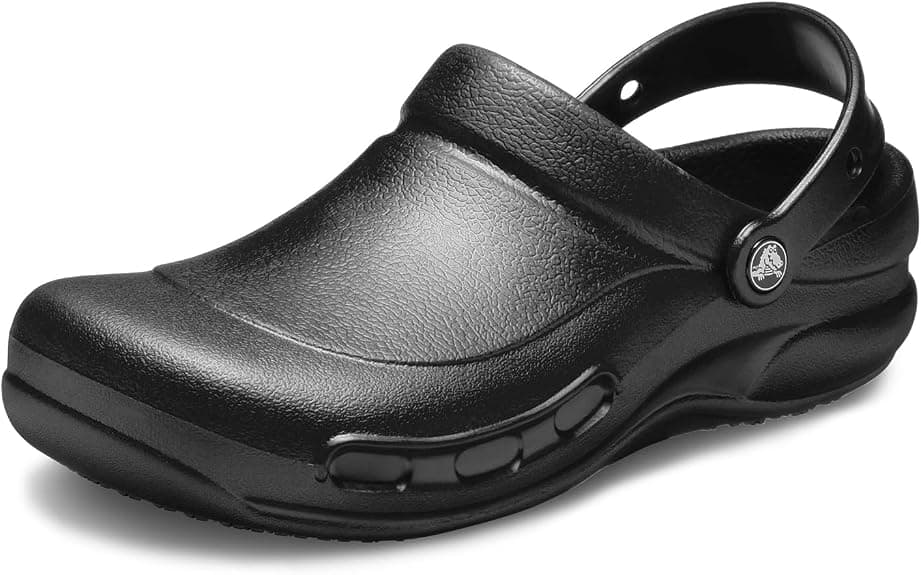
The only listing naming a test standard
Crocs Bistro Work Clog
BasisASTM certification appears in this listing and in none of the other sixty-seven listings in this catalog.
The listing states an enclosed toe, slip resistant construction, an easy wipe-clean surface and ASTM certification.
Claim words in this listing: 1
Closure statedNo closure stated
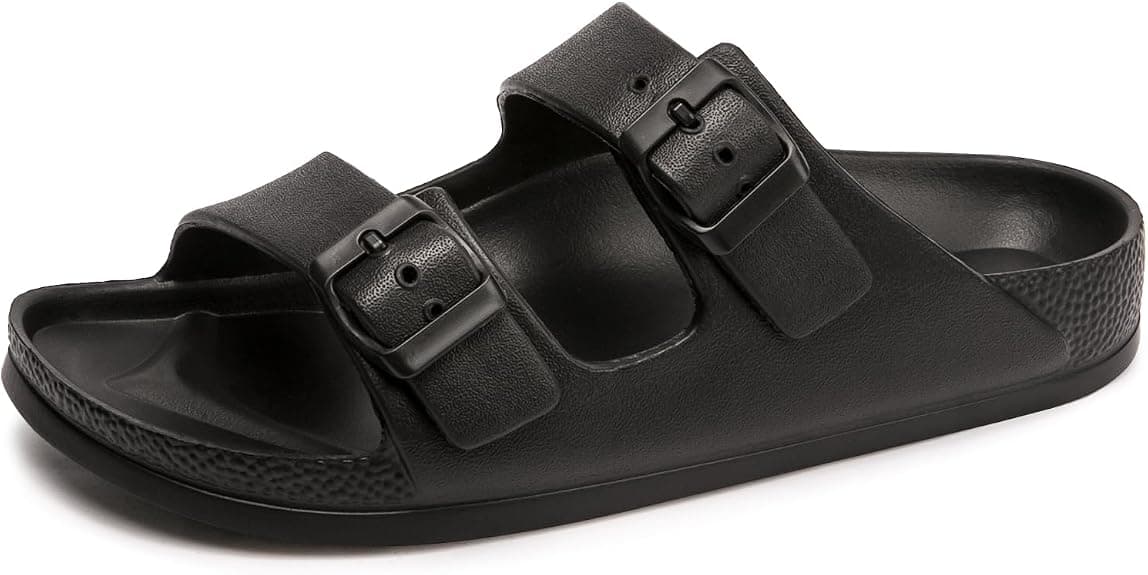
FUNKYMONKEY Comfort Slides
The listing states an adjustable buckle, arch support and waterproof non-slip construction.
Claim words in this listing: 3
Closure statedBuckle
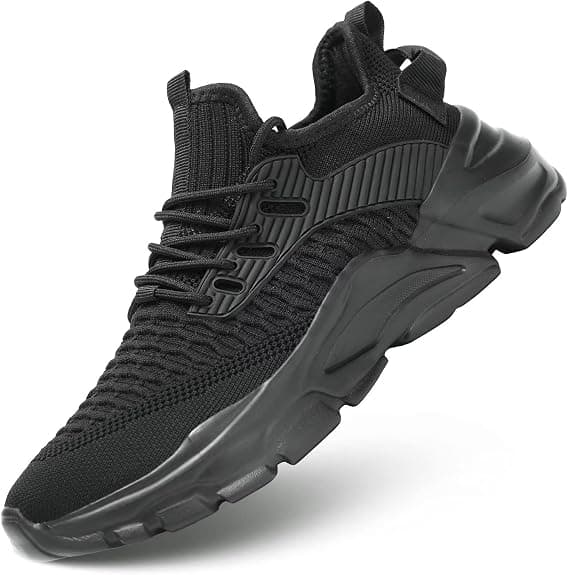
Srenket Men’s Running Shoes
The listing states non-slip, breathable and lightweight construction with a slip resistant sole.
Claim words in this listing: 1
Closure statedNo closure stated
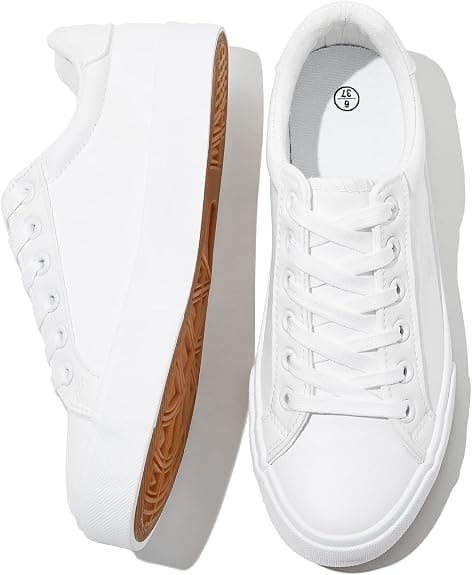
Two voluntary words in one line
SERNIAL White PU Leather Sneakers
BasisWater resistant and slip resistant both appear here; each has a published test method somewhere in the world, and the listing cites neither.
The listing states water resistant and slip resistant construction that is easy to clean.
Claim words in this listing: 2
Closure statedNo closure stated
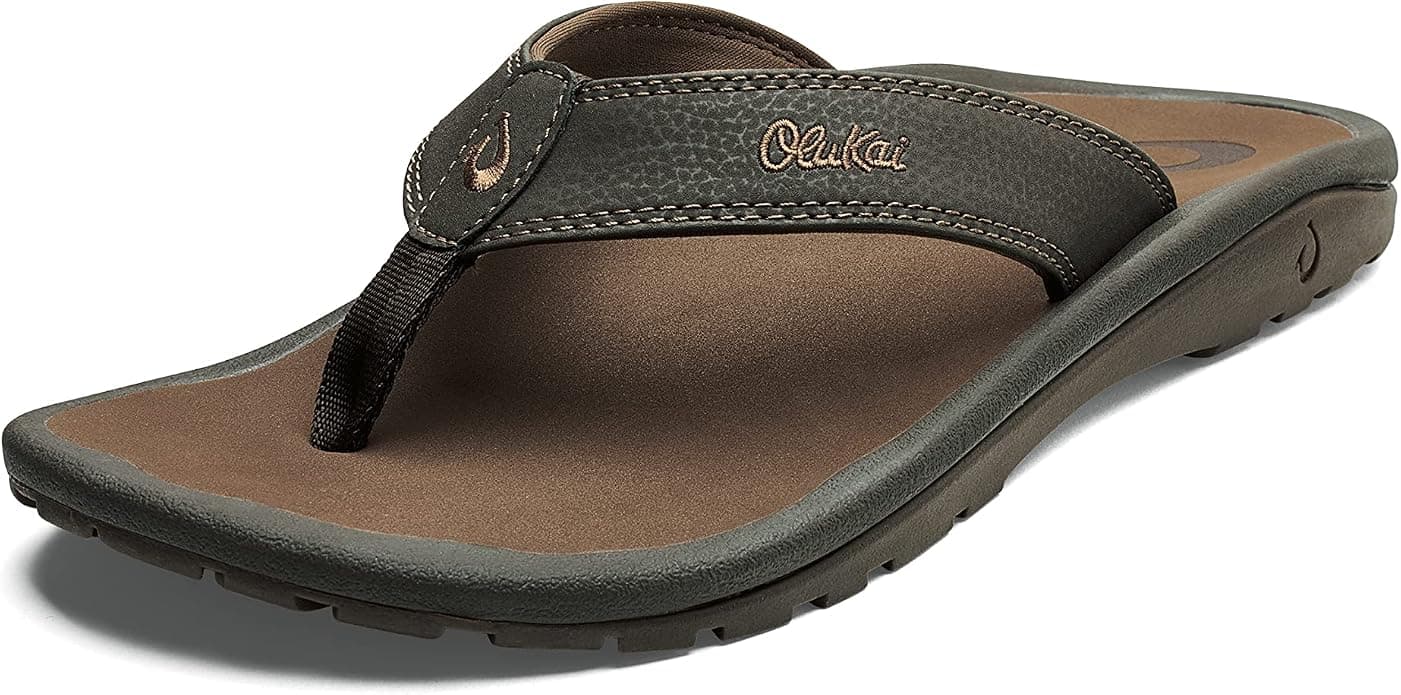
Water words on a flip-flop
OluKai Ohana Sandals
BasisWater resistant and traction for wet surfaces both appear here, and neither arrives with a test or a figure.
The listing states water resistant flip flops with arch support and traction for wet surfaces.
Claim words in this listing: 2
Closure statedToe post